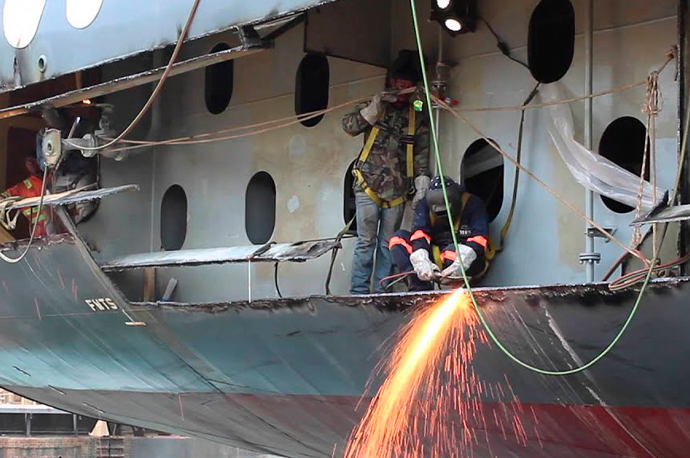
Rapid Damage Triage in Dock Conditions
Urgent hull repair starts with correct prioritization. We identify which damage is cosmetic, which threatens laminate stability, and which can escalate if moisture ingress or repetitive loading is ignored. That early triage allows owners and managers to make informed decisions without wasting time on guesswork. Our team works with a direct-action checklist covering fracture lines, stress spread, fairing loss, coating breach, edge exposure, and practical dock constraints so repair scopes stay accurate from the beginning.
Structural and Cosmetic Balance
A professional marine repair cannot focus only on appearance or only on hidden reinforcement. We combine laminate integrity, contour restoration, and surface finish planning so the repaired area performs correctly and also blends with the vessel’s existing lines. This is especially important for owner-operated yachts and premium charter craft where visible hull quality directly affects confidence, value perception, and future inspections.
Clear Communication for Time-Sensitive Cases
Dock repair often happens under pressure: departures are scheduled, surveys are approaching, crews are waiting, and marina slots are limited. We keep communication practical and concise, explaining the sequence of work, likely material steps, and realistic progression without overcomplication. Clients receive a service relationship based on clarity rather than uncertainty, which helps align technical expectations with operational deadlines.
Adaptable Support for Different Yacht Profiles
Not every vessel arrives with the same needs. Some require localized dock rash repair, while others need broader structural rebuilding, finish matching, sealing updates, or assistance ahead of transport or survey. We adapt our repair approach to the vessel type, damage profile, access constraints, and expected usage, helping owners move from incident response to stable recovery with a method suited to the actual case instead of a one-size-fits-all routine.
Dock Coordination with Quality-Focused Execution
Efficient repair is not simply about working fast. It requires preparation of the repair zone, sensible sequencing, disciplined material handling, attention to curing conditions, controlled shaping, and finish inspection before release. We build our advantage around that balance—responsive scheduling paired with careful workmanship—so urgent interventions do not become rushed compromises. The result is a repair process that supports durability, presentation, and practical return to service.